Marine Mammals Lack Functional Gene to Defend Against Popular Pesticide
As marine mammals evolved to make water their primary habitat, they lost the ability to make a protein that defends humans and other land-dwelling mammals from the neurotoxic effects of a popular man-made pesticide, according to new research from the University of Pittsburgh School of Medicine.
The implications of this discovery, announced today in Science, led researchers to call for monitoring our waterways to learn more about the impact of pesticides and agricultural run-off on marine mammals, such as dolphins, manatees, seals and whales. The research also may shed further light on the function of the gene encoding this protein in humans.
“We need to determine if marine mammals are, indeed, at an elevated risk of serious neurological damage from these pesticides because they biologically lack the ability to break them down, or if they’ve somehow adapted to avoid such damage in an as-yet undiscovered way,” said senior author Nathan L. Clark, Ph.D., associate professor in Pitt’s Department of Computational and Systems Biology, and the Pittsburgh Center for Evolutionary Biology and Medicine. “Either way, this is the kind of serendipitous finding that results from curiosity-driven scientific research. It is helping us to understand what our genes are doing and the impact the environment can have on them.”
Continue reading at UPMC
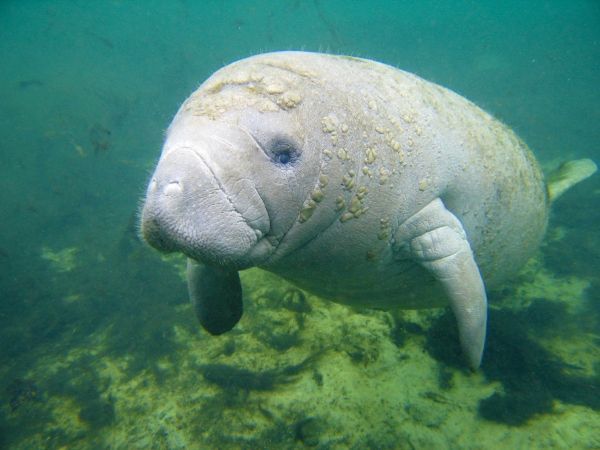
Image via R. Bonde, USGS